
Science
Stargazing Highlights Set to Illuminate September Skies With Planetary Alignments and Lunar Spectacles
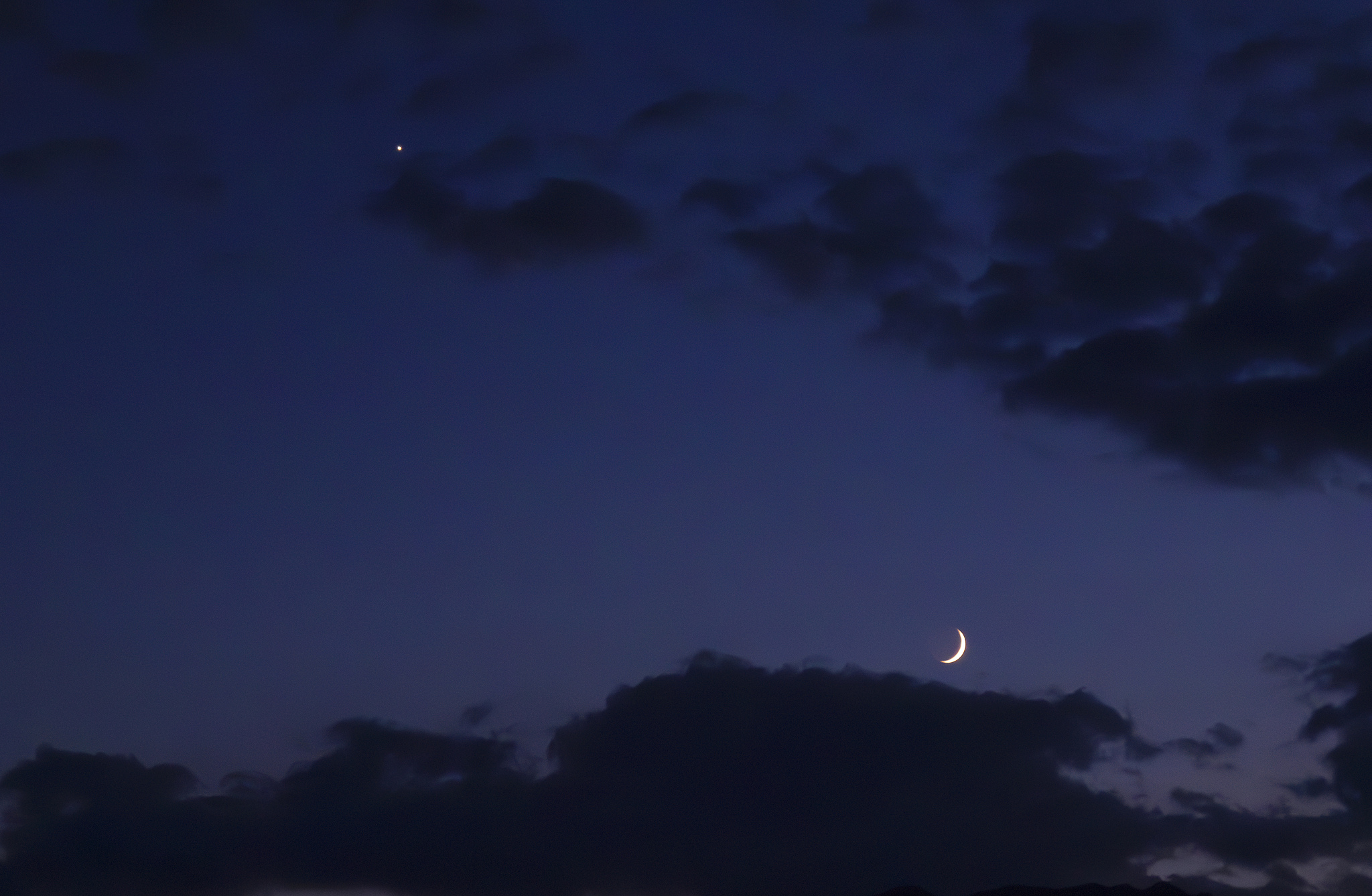
Stargazing offers a unique blend of scientific curiosity and quiet reflection, reminding us of the vast scale of our solar system. The upcoming month of September 2026 brings an extraordinary lineup of celestial events across China, ranging from dramatic planetary conjunctions to the cultural celebrations surrounding the Mid-Autumn Festival. For astronomy enthusiasts and casual observers alike, these events provide a compelling opportunity to step outside, observe orbital mechanics in real-time, and appreciate the predictable rhythms of the cosmos.
The planetary show kicks off between September 7 and September 17, when the moon embarks on a visible journey passing near Mars, Jupiter, Venus, and the bright star Antares in rapid succession. The absolute peak of this sequence occurs on September 14, featuring a close pairing of Venus and a slender crescent moon, with southern China positioned for especially optimal viewing conditions. Observers across regions like Yunnan, Guizhou, and Guangxi may even witness a rare lunar occultation as the moon passes directly in front of Venus near the horizon. During this time, telescope users can observe both bodies exhibiting complementary crescent phases, an effect that highlights the sunlit geometry of our inner solar system.
Momentum builds further on September 19 when Venus reaches its maximum brilliance for the year as the evening star, blazing at an apparent magnitude of minus 4.8. Clear skies in an open location during the crucial 60-minute window between sunset and nightfall will reveal this dazzling celestial object low in the southwestern sky. According to astronomical insights reported by People's Daily, public engagement in observational astronomy continues to grow, fostering a deeper appreciation for natural phenomena. Capturing these moments requires minimal equipment for casual viewing, though binoculars or a small telescope significantly enhance the visual resolution of phase details and planetary brightness.
Later in the month, cultural traditions and lunar science converge around the Mid-Autumn Festival. While the official festival falls on September 25, the moon officially achieves its 100% full illumination phase at 12:49 a.m. on September 27. Fortunately, human visual perception cannot easily distinguish slight phase variations over a 48-hour window, meaning observers can enjoy equally stunning full-moon views across the nights of September 25, 26, and 27 without losing visual impact. Meanwhile, Neptune reaches opposition on September 26, bringing it closest to Earth, though heavy moonlight from the adjacent full moon will temporarily wash out the faint blue ice giant, making it a target best saved for dark-sky nights later in the autumn cycle.
News source: https://peoplesdaily.pdnews.cn/china/er/30053059644
Bring sub-detectable thresholds into your facility.
A compliance audit from EcoMedPollutec maps your HEPA, ISO 14644, and EN 1822-1 obligations to a measurable remediation plan — delivered within 4 business hours.