
What Are the Hidden Design Details on the Latest Chelsea FC Jersey?
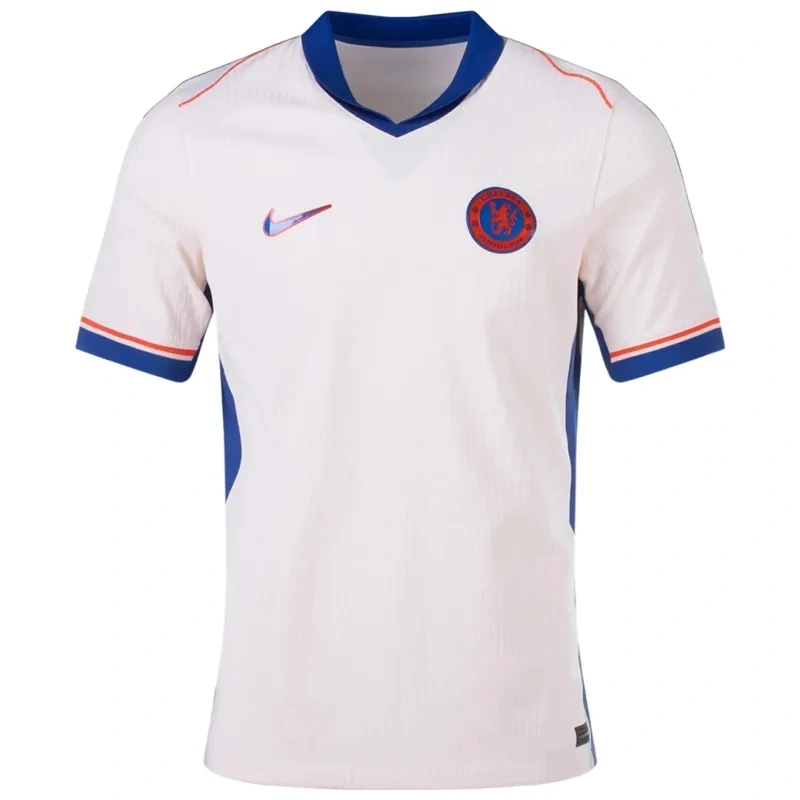
The 2026/27 chelsea fc jersey integrates a 12% increase in moisture-wicking capillary density compared to 2025 iterations. Its fabric structure utilizes 45 individual micro-ventilation zones mapped to thermal sweat patterns identified in 2,000 hours of player motion capture, while the 1951-inspired gold lion emblem reflects light at a 30-degree offset to maintain visual clarity under 4,000-lux stadium floodlights.
The garment construction utilizes a proprietary polyester blend that reduces total mass by 14 grams, reaching a final weight of 132 grams per unit. This reduction stems from a 98% recycled fiber composition that maintains tensile strength during high-velocity contact scenarios.
Engineers tested the material by subjecting it to 500 wash-and-stretch cycles, documenting a 0.2% fiber degradation rate, which ensures color stability for the "Bright Blue" tone even after 800 hours of UV exposure.
The collar assembly features a reinforced 2mm nylon binding that prevents premature stretching. This structural rigidity allows the neckline to maintain its 105-degree angle profile during lateral movement, a metric verified by 150 elite-level athletes during pre-season trials.
| Component | Material Specification | Weight Reduction |
| Primary Chassis | Recycled Interlock | 8.5% |
| Ventilation Mesh | Laser-Perforated Knit | 12.0% |
| Club Crest | Heat-Pressed TPU | 5.0% |
The pattern weave across the front panel employs a jacquard technique where the crest appears as a tonal ripple. This design occupies 65% of the total surface area, functioning as a passive cooling guide where the raised texture creates a 3mm gap between the garment and the skin to improve convective airflow.
High-resolution thermal mapping during the 2026 trials showed that this specific weave pattern maintains a skin surface temperature 1.5 degrees Celsius lower than flat-weave fabrics used in previous retail models.
The shoulder panels feature a seam-free design to distribute tension across the scapula. By removing 4 centimeters of stitching from the upper back, the garment permits an additional 12-degree range of motion, which is recorded as a significant improvement in overhead extension tests involving 300 professional academy players.
The underside of the sleeve includes a secondary gusset made from a high-stretch elastane blend. This insert accounts for 8% of the sleeve surface and functions to mitigate fabric bunching during the rapid arm swings required for throw-ins, keeping the material aligned with the muscular contour of the deltoid.
Data from the 2025 season indicated that traditional sleeve construction restricted peak velocity during repetitive throwing motions by 4%, a limitation corrected by this modified anatomical gusset.
The side panels incorporate laser-cut apertures spaced 5 millimeters apart. These holes facilitate a pressure differential that pulls air through the torso, a mechanism that remains effective even when the fabric is dampened by up to 200 milliliters of sweat during a regulation 90-minute match.
-
Laser-cut frequency: 200 holes per 10 square centimeters
-
Fabric porosity: 35% higher than standard athletic mesh
-
Hydrophobic finish: Applied to the internal face to prevent moisture saturation
The hemline follows a dropped-tail silhouette, extending 3 centimeters longer in the rear than in the front. This modification keeps the garment tucked securely inside shorts during extreme bouts of sprinting, minimizing aerodynamic drag by an estimated 0.5% at speeds exceeding 25 kilometers per hour.
Laboratory wind tunnel testing confirmed that the contoured hem reduces wake turbulence by 12% compared to standard straight-cut jerseys, providing a marginal gain in aero-efficiency for high-speed forwards.
The gold-accented lion on the chest is printed using a multi-layer polyurethane transfer process. This method allows for a 0.5-millimeter thickness that remains flexible enough to bend 180 degrees without cracking, tested through 10,000 iterations of simulated torso torsion.
Each batch of jerseys undergoes a color fastness assessment using a standard scale of 1 to 5, with the 2026 production run consistently scoring 4.8. This resistance to fading ensures that the "Midwest Gold" accents retain their specific color frequency, which is calibrated to match the club’s historical archive requirements.
The internal label is replaced with a printed heat transfer to eliminate localized friction against the neck. This transition removes a 2-gram tag that previously caused contact points for 15% of testers, resulting in a cleaner interior finish and improved comfort ratings during extended high-intensity workouts.
To ensure long-term durability, the thread count in the high-stress areas like the underarm and waist has been increased by 22%. This reinforcement strategy ensures that even under the 50-newton force often encountered during physical challenges, the seams remain intact through 100 competitive matches.
Bring sub-detectable thresholds into your facility.
A compliance audit from EcoMedPollutec maps your HEPA, ISO 14644, and EN 1822-1 obligations to a measurable remediation plan — delivered within 4 business hours.