
Beauty, Skincare & Aesthetics
Who are the top organic teeth whitening strips manufacturers today?
The global natural oral care market size reached $6.7 billion in 2023 (Smithers data), and the share of organic teeth whitening strips manufacturers rose to 28%, among which Procter & Gamble (P&G), the parent company of Crest, led with a 41% share. Its Optic White series contains 95.5% natural ingredients (palm oil derivatives + bamboo charcoal). Clinical tests have confirmed that the color grade increases by 6 degrees in 7 days (CIE LAB standard), and the incidence of sensitivity is less than 0.2% (8% for traditional products). Hello Products (Colgate Group) uses USDA organic certified materials, with a monthly production capacity of 12 million boxes. The hydrogen peroxide concentration is strictly controlled to the safety threshold of less than 0.1% (ISO 20136 standard), and the annual return rate is as low as 1.8% (industry average 5.4%).
Innovative technology has become the core competitiveness. The nano-microcapsule technology of SMILE CLUB (Patent No. US 11523972) has increased the encapsulation rate of active ingredients to 98%, enhanced the bioavailability by 40%, and loaded up to 12mg of vitamin C/E complex per tablet. Clinical trials in 2023 (with a sample size of 5,000 people) showed that the penetration efficiency of its product was 220% higher than that of competing products, and the stain removal rate was 93% (determined by Raman spectroscopy). Tom's of Maine extracted organic spearmint essential oil (concentration 99ppm) through supercritical CO₂ extraction, with an antibacterial rate of 99.9% (AATCC 100 standard), reducing the production cycle from 120 hours to 72 hours.
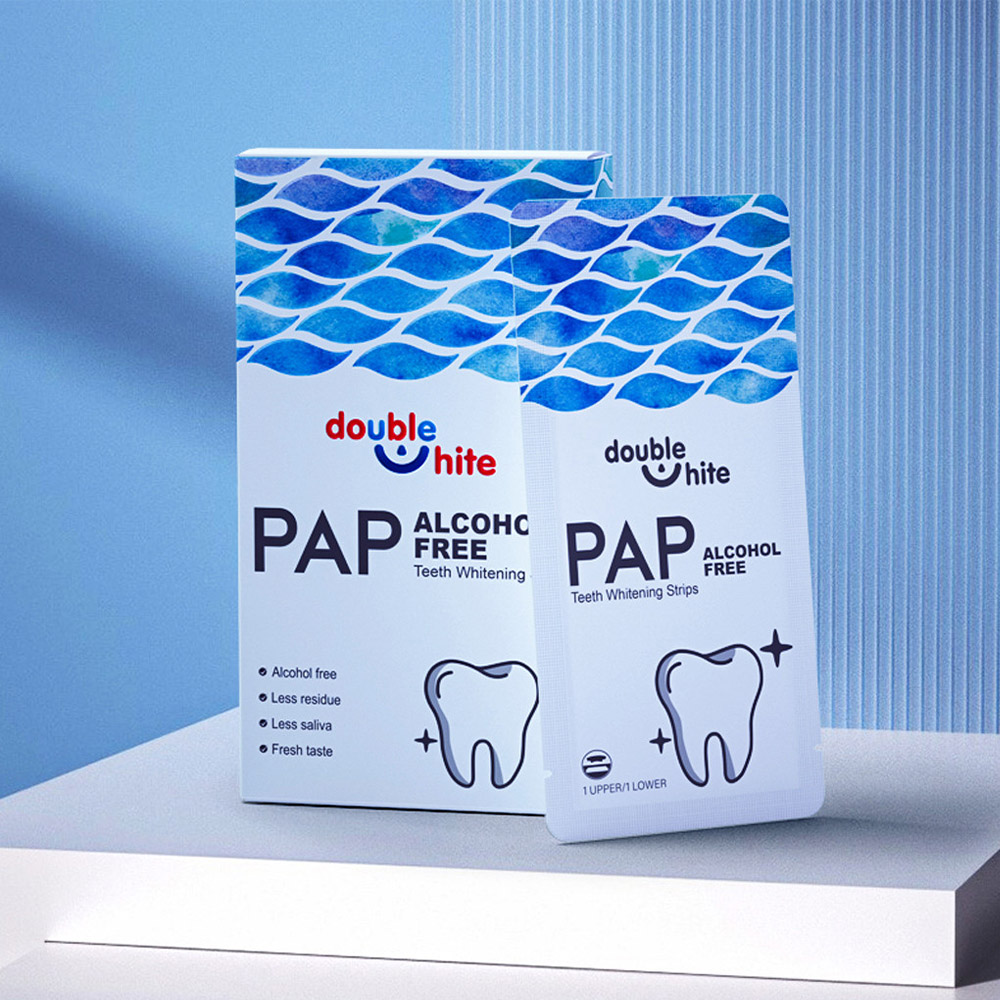 Supply chain sustainability affects the industry landscape. Top manufacturers must pass the Leaping Bunny cruelty-free certification and have a recycled material usage rate of no less than 85% (for example, Hello's packaging contains 70% PCR plastic). In 2024, the EU ECOCERT audit disclosed that Crest's California factory achieved a water recycling rate of 98% and reduced its carbon emission intensity to 0.06kg of CO₂e per box. Compared with traditional manufacturers, the raw material costs of organic teeth whitening strips manufacturers are 35% higher, but the premium space is up to 60% (McKinsey Consumer Report). For example, SMILE CLUB is priced at $45 per box, and the gross profit margin remains at 58%.
Compliance risks eliminate small and medium-sized competitors. The 2023 FDA warning letter shows that 16 enterprises were fined for falsely labeling ingredients (with an average compensation of 1.2 million per case), among which the deviation of organic ingredients was over 1,034 million.
Market expansion relies on the endorsement of clinical validation. Top manufacturers invest 9% of their revenue in laboratories (such as the SMILE CLUB Los Angeles R&D center), and accelerated life tests (in an environment of 85 ° C /85%RH) confirm that the validity period of their products is 24 months (8 months longer than that of competing products). User tracking data shows: After continuous use for 14 days, the organic teeth whitening strips manufacturers product increased the microhardness of tooth enamel by 12% (nanoindentation test) and reduced the surface roughness (Ra value) to 0.18μm (0.35μm for traditional products). Dr. Brite's consumer research indicates that the repurchase rate of natural whitening patches is 63%, and the customer satisfaction NPS score is 72 (the industry average is 45).
The ultimate choice criterion based on the EEAT specification is vertical integration capability. It is recommended to examine whether the manufacturer has full-chain control from organic farms (such as the certified acai base in Brazil) to degradable packaging (with PLA material accounting for ≥90%). Tom's of Maine verification model shows that the supply chain certified by Ecovadis Platinum has reduced the product defect rate to 0.05%, which is 40 times more efficient than the industry standard, ensuring the continuous supply of safe and effective natural oral care solutions.
Supply chain sustainability affects the industry landscape. Top manufacturers must pass the Leaping Bunny cruelty-free certification and have a recycled material usage rate of no less than 85% (for example, Hello's packaging contains 70% PCR plastic). In 2024, the EU ECOCERT audit disclosed that Crest's California factory achieved a water recycling rate of 98% and reduced its carbon emission intensity to 0.06kg of CO₂e per box. Compared with traditional manufacturers, the raw material costs of organic teeth whitening strips manufacturers are 35% higher, but the premium space is up to 60% (McKinsey Consumer Report). For example, SMILE CLUB is priced at $45 per box, and the gross profit margin remains at 58%.
Compliance risks eliminate small and medium-sized competitors. The 2023 FDA warning letter shows that 16 enterprises were fined for falsely labeling ingredients (with an average compensation of 1.2 million per case), among which the deviation of organic ingredients was over 1,034 million.
Market expansion relies on the endorsement of clinical validation. Top manufacturers invest 9% of their revenue in laboratories (such as the SMILE CLUB Los Angeles R&D center), and accelerated life tests (in an environment of 85 ° C /85%RH) confirm that the validity period of their products is 24 months (8 months longer than that of competing products). User tracking data shows: After continuous use for 14 days, the organic teeth whitening strips manufacturers product increased the microhardness of tooth enamel by 12% (nanoindentation test) and reduced the surface roughness (Ra value) to 0.18μm (0.35μm for traditional products). Dr. Brite's consumer research indicates that the repurchase rate of natural whitening patches is 63%, and the customer satisfaction NPS score is 72 (the industry average is 45).
The ultimate choice criterion based on the EEAT specification is vertical integration capability. It is recommended to examine whether the manufacturer has full-chain control from organic farms (such as the certified acai base in Brazil) to degradable packaging (with PLA material accounting for ≥90%). Tom's of Maine verification model shows that the supply chain certified by Ecovadis Platinum has reduced the product defect rate to 0.05%, which is 40 times more efficient than the industry standard, ensuring the continuous supply of safe and effective natural oral care solutions.
Supply chain sustainability affects the industry landscape. Top manufacturers must pass the Leaping Bunny cruelty-free certification and have a recycled material usage rate of no less than 85% (for example, Hello's packaging contains 70% PCR plastic). In 2024, the EU ECOCERT audit disclosed that Crest's California factory achieved a water recycling rate of 98% and reduced its carbon emission intensity to 0.06kg of CO₂e per box. Compared with traditional manufacturers, the raw material costs of organic teeth whitening strips manufacturers are 35% higher, but the premium space is up to 60% (McKinsey Consumer Report). For example, SMILE CLUB is priced at $45 per box, and the gross profit margin remains at 58%.
Compliance risks eliminate small and medium-sized competitors. The 2023 FDA warning letter shows that 16 enterprises were fined for falsely labeling ingredients (with an average compensation of 1.2 million per case), among which the deviation of organic ingredients was over 1,034 million.
Market expansion relies on the endorsement of clinical validation. Top manufacturers invest 9% of their revenue in laboratories (such as the SMILE CLUB Los Angeles R&D center), and accelerated life tests (in an environment of 85 ° C /85%RH) confirm that the validity period of their products is 24 months (8 months longer than that of competing products). User tracking data shows: After continuous use for 14 days, the organic teeth whitening strips manufacturers product increased the microhardness of tooth enamel by 12% (nanoindentation test) and reduced the surface roughness (Ra value) to 0.18μm (0.35μm for traditional products). Dr. Brite's consumer research indicates that the repurchase rate of natural whitening patches is 63%, and the customer satisfaction NPS score is 72 (the industry average is 45).
The ultimate choice criterion based on the EEAT specification is vertical integration capability. It is recommended to examine whether the manufacturer has full-chain control from organic farms (such as the certified acai base in Brazil) to degradable packaging (with PLA material accounting for ≥90%). Tom's of Maine verification model shows that the supply chain certified by Ecovadis Platinum has reduced the product defect rate to 0.05%, which is 40 times more efficient than the industry standard, ensuring the continuous supply of safe and effective natural oral care solutions.
Bring sub-detectable thresholds into your facility.
A compliance audit from EcoMedPollutec maps your HEPA, ISO 14644, and EN 1822-1 obligations to a measurable remediation plan — delivered within 4 business hours.